
The evidence-based clinical AI tool designed with nurses, for nurses
Every shift, nurses must make high-stakes decisions about patient care at speed.
AI holds great promise to help nurses deliver quality care by offering clinical-grade, cited facts to support decision-making, right at the bedside.
But until now, there have been very few clinical AI tools built for nurses.
There are clinical AI tools for physicians, but these are not designed for nurses’ particular challenges and workflows. Lacking good options, many nurses turn to general purpose AI tools that may not provide trustworthy advice.
Responding to this challenge is a clinical AI tool designed by nurses, with nurses: ClinicalKey Nursing AI.
Nurses can ask a question the way they would ask a colleague and get a clear, sourced answer in the moment whether they're checking a procedure, a medication or what to prioritize, escalate, or monitor. The system was developed with nurses who understand the priorities and the stakes of nursing care.
Perhaps most importantly, nurses can easily integrate ClinicalKey Nursing into their workflows. Every response is grounded in evidence-based nursing content including Elsevier Clinical Overviews, Gold Standard drug monographs, leading nursing textbooks like Lewis’s Medical-Surgical Nursing, and the AACN Procedure Manual – with clear citations so nurses know exactly where the answer comes from.
Built by nurses, for nurses
Nurses and doctors work at different rhythms and scopes of responsibility, even when caring for the same patient. That means AI built for doctors is not designed to support nursing workflows.
Craig Lindsey, a chief nursing officer and clinical informatics leader, has seen the consequences of assuming technology designed for doctors is right for nurses. “I’ve seen companies take a tool designed for physicians and say, Hey, we can repackage this and Hey, this is great for nursing.”
“Didn’t work,” he says.
Nurses need AI that understands their specific challenges. ClinicalKey Nursing AI is shaped by nurses to speak nurses’ language and to give the most relevant response for nurses’ unique decision points and responsibilities.
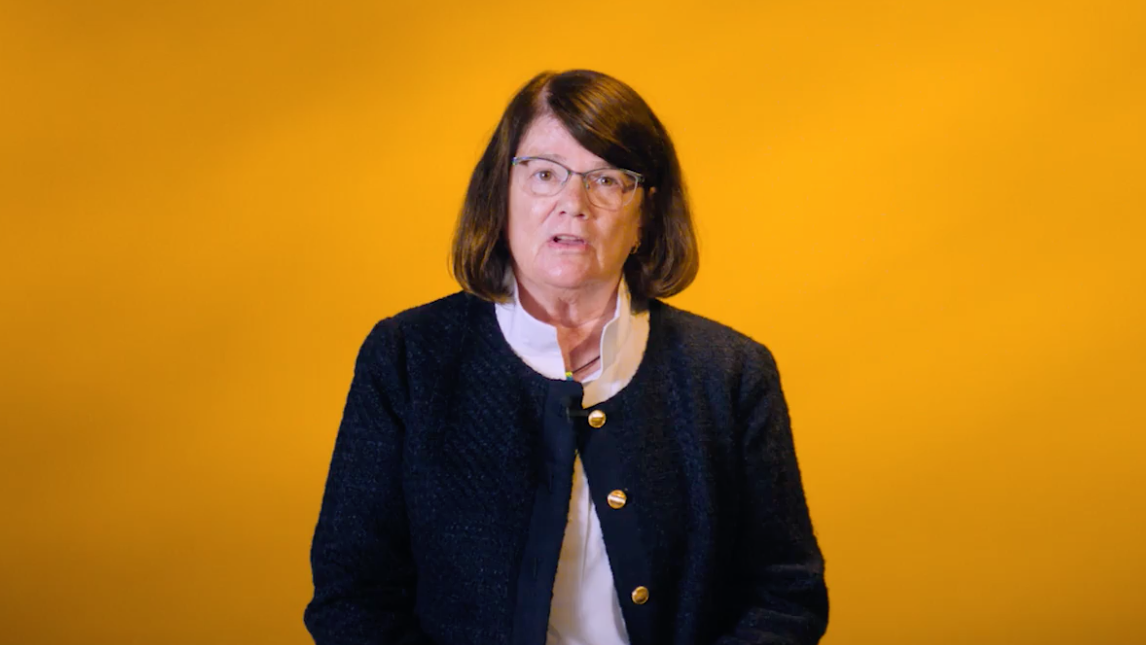
Terri Glessner, Chief Nursing Officer at Rochester General Health System, explains why it’s important that technology for nurses is built by nurses.
Clinical-grade evidence with clear sources
Nurses care deeply about providing the best care possible, so they want to base their patient care decisions on solid evidence.
General-purpose AI models give answers quickly, but the validity of these answers can be very much in question – and the sources hidden. It can be hard if not impossible for a nurse to know if an answer is based on reliable facts.
Tim Morris, a former emergency charge nurse who now leads Elsevier’s nursing portfolio, says that general-purpose AI “might give me an answer, but is it accurate?” General-purpose models may not lighten nurses’ workloads, he says, because “having to validate what a system returns just moves the pressure to a different place.”
Support from ClinicalKey Nursing AI, in contrast, is wholly based on peer-reviewed medical evidence from sources like the New England Journal of Medicine. Every answer is traced to an exact paragraph in the source material so nurses can see precisely where answers come from.

Tracy Gosseling, Chief Nurse Executive at Memorial Sloan Kettering Cancer Center explains why general-purpose AI is problematic and why trustworthy AI advice is critical in nursing.
AI that nurses welcome
In a 2026 Elsevier study, US registered nurses who tried ClinicalKey Nursing AI report that it delivers responses just as quickly as general-purpose AI – but, crucially, nurses trust the answers.
Of the nurses surveyed...
said they felt more confident in clinical decision-making with ClinicalKey Nursing AI
said the tool fits their workflows
would continue using it if their hospitals provided access
said it saved them time during their shift, giving them more time to do what they do best – care for people
Clinical AI the right way
AI has huge potential to help nurses deliver quality care by surfacing trusted, clinical-grade facts just when nurses need them.
But to deliver on this potential, a clinical AI tool must be based on trusted clinical evidence. And it must be designed with a deep understanding of how nurses work – and the decisions they make at the bedside.
ClinicalKey Nursing AI was developed with nurses for nurses, and draws on Elsevier’s trusted nursing content: leading nursing journals, authoritative reference books, and Clinical Skills procedures. It supports nurses’ clinical judgment, helping them prioritize what matters most, know when to escalate, and decide what to monitor. And because every answer is cited, nurses can see exactly where it came from before they act.
With ClinicalKey Nursing AI, nurses can quickly find the information they need so that more of their attention can stay where it belongs - with the patient.